

Improving at golf isn’t about grinding endlessly on the range, it’s about practicing with purpose; or as we at ParPro like to say, “Swing Smarter, Not Harder.” Whether you're a weekend golfer chasing lower scores or a competitive player preparing for tournament season, the right practice routine can dramatically accelerate your progress.
In this blog, you’ll discover tour-tested routines, proven drills, and practice strategies that help you build consistency, confidence, and measurable improvement.
Why a Structured Golf Practice Routine Matters
Most golfers hit ball after ball with no plan. They roll a ball out of the holder and hit it—no target, no movement focus, hoping repetition alone fixes inconsistency. But research suggests otherwise. According to a study from the Journal of Sports Sciences, golfers who used structured practice routines improved performance nearly 40% more than those using repetition-only practice.
A good routine ensures you:
- Warm up properly
- Train key movement patterns
- Reinforce fundamentals
- Increase mental focus
- Measure improvement over time
This combination is what transforms scattered range sessions into deliberate practice. This is the same method used by top coaches and PGA professionals. If you keep practicing the same “WRONG” routine, you will become very good at being WRONG!
How Long Should a Golf Practice Session Be?
Most amateurs don’t need hours at the range. What you need is efficiency at the range. In all honesty, a large bucket should be enough for the weekend warrior, or even a lower handicap of 10.
- 30 minutes – Focused fundamentals
- 60 minutes – Complete tee-to-green practice
- 90+ minutes – Tournament-style session with pressure drills
Pro tip: Break each session into segments so you practice with intention, not fatigue.
The Ultimate Golf Practice Routine (60-Minute Model)
This routine includes warm-ups, mechanics, skill-building drills, and real-course simulation. It works for all handicaps and can be adjusted depending on your strengths and weaknesses.
Warm-Up (10 Minutes): Prepare Your Body & Swing
1. Dynamic Mobility (3 Minutes)
Golf is rotational. Your warm-up should be too.
- Torso turns with club
- Hip circles
- Arm circles
- Light squat-to-stand stretches
- Those silly knee swirls that Miguel Ángel Jiménez performs (don’t worry about people looking at you).
This improves mobility and reduces early-session swing faults.
2. Impact-Point Awareness (2 Minutes)
Place a tee in the ground just ahead of the ball. Take half swings and try to brush the tee each time.
This encourages:
- Forward shaft lean
- Ball-first contact
- Improved low-point control
3. Tempo Swings (5 Minutes)
Use a 3:1 backswing-to-downswing ratio. Smooth. Athletic. Repeatable. A metronome app works great if you struggle with tempo.
Mechanics Training (15 Minutes): Build Sound Fundamentals
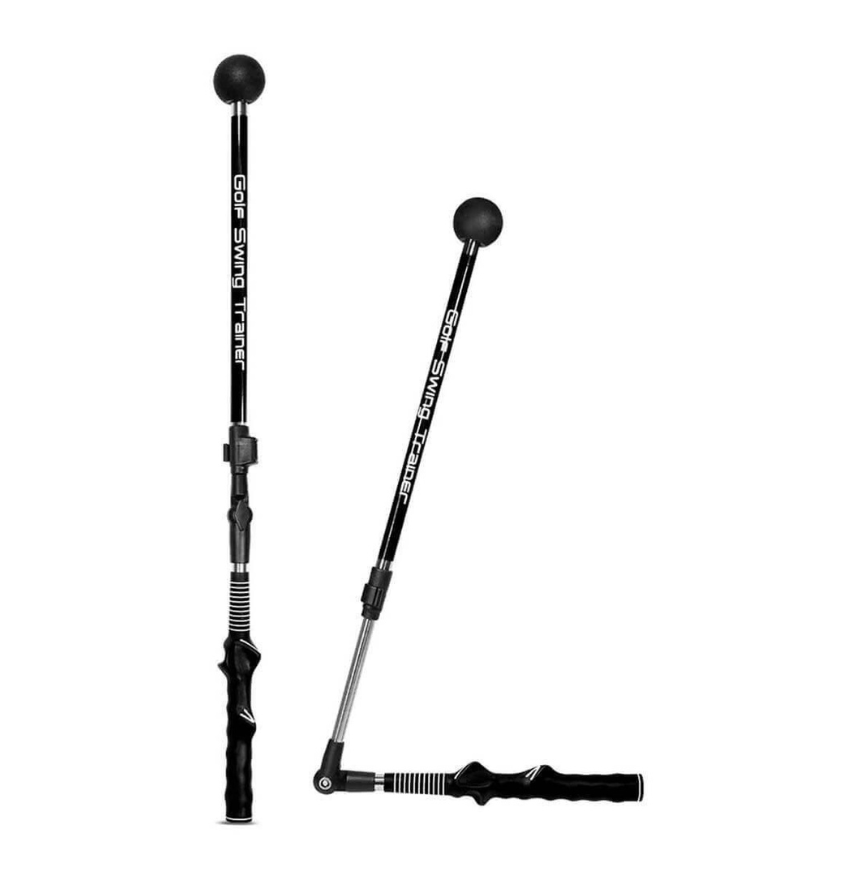
Choose one focus for the day—grip, posture, takeaway, rotation, or strike. Do not tackle everything at once. Our trainer suits this practice drill perfectly: the ParPro Swing Trainer.
Mirror or Video Work (Optional but Powerful)
Record your swing:
- Down-the-line
- Face-on
Look for patterns instead of chasing perfection.
Skill Training (20 Minutes): Bridge the Gap Between Range & Course
This is where your practice shifts from mechanics to performance.
Random Practice: Change Clubs Every Shot
Players who constantly switch clubs develop adaptability much faster than those who hit the same club repeatedly.
Example sequence:
- 9-iron to 120 yards
- Driver to right-center target
- 6-iron low punch
- Gap wedge high shot
This creates on-course variability and reduces the “range golfer” syndrome—you know, that person at the range who hits one club straight for 45 minutes and changes nothing in the routine.
Pressure Drill: The Fairway Finder
(This drill boosts accuracy under mental pressure.)
The average amateur hits only 49% of fairways (USGA handicap data). An average fairway width is about 40 yards wide. Picture three entire school buses end to end—that is your hit zone.
How it works:
- Pick an imaginary fairway 30 yards wide
- Hit 10 drives
- You must land 6 of them inside your target zone
If you fail, restart. This simulates tournament-like consequences and stress.
Short Game Priority (10 Minutes): The Fastest Way to Lower Scores
Ask any PGA coach: short game is the “great equalizer.” Over 65% of golf shots occur inside 100 yards—but most amateurs spend less than 20% of their practice time there.
Chipping Ladder Drill
- Set targets at 10, 20, and 30 feet
- Land 3 consecutive balls on each target before moving on
- Restart if you miss
This builds distance control, touch, and green awareness.
Putting Gate Drill
One of Tiger Woods’ favorites, and ours—although we need more practice!
Place two tees slightly wider than your putter head and roll putts through the gate. When you are on the practice green, use the tees and space them out every 2–3 feet and hit the one closest to the hole, then move down the line. This is truly an amazing drill.
You’ll fix:
- Off-center strikes
- Face angle inconsistency
- Poor distance control
Head over to ParPro putter gates to pick up the indoor or outdoor putter set. This will allow you to practice indoors with real tools.
Advanced Practice Drills for Consistency
These drills elevate your game beyond casual range practice.
The 3-Ball Shaping Drill
Hit:
- One draw
- One fade
- One straight shot
Repeat with different clubs. This improves clubface awareness and reduces two-way misses.
The 9-Up-and-Down Short Game Challenge
Pick three locations around the green:
- Tight lie
- Rough
- Bunker
Hit three balls from each and try to get up and down at least five times total. This creates realistic scoring pressure.
The Lag Putting T-Drill
Place tees at:
- 20 feet
- 30 feet
- 40 feet
- 50 feet
Roll each putt and aim to stop the ball within a 3-foot circle. This teaches pace control—the #1 factor that reduces 3-putts.
How to Track Your Practice Progress
Progress requires measurement. Use a simple scorecard to record:
- Fairways hit
- Greens in regulation
- Up-and-down percentage
- 3-putts per round
- Proximity inside 100 yards
Common Practice Mistakes (and How to Avoid Them)
Most golfers plateau because they unknowingly sabotage their own progress. Been there, done that!
Avoid these traps:
- Hitting too many full swings with no target
- Ignoring short game
- Making five swing changes at once
Be intentional. Small improvements done consistently outperform major overhauls done occasionally.
Sample Weekly Golf Practice Schedule
Here’s what we think is a balanced plan used by low-handicap players. Just because you are a 20+ handicap doesn't mean you can’t practice like the pros.
3-Day Schedule (Ideal for Busy Golfers)
Day 1 – Range with Wedges
- Warm-up
- Mechanics
- 50-yard wedge ladder (start with 10 yards, 20 yards, etc., or work your way back)
- 9-ball driver challenge (you are looking for straight or a fade – NO SLICES)
Day 2 – Short Game Only
- Chipping ladder
- Bunker practice
- Putting T-drill
Day 3 – On-Course Practice
- Play 9 holes
- Drop an extra ball for approach shots (if it’s not busy, fall & winter are perfect for this)
- Score up-and-down challenges
5-Day Schedule (Competitive Golfer)
Add two more sessions:
- One full-swing mechanics day
- One putting-only day with speed drills
Conclusion: Swing Smarter, Not Harder!
If you want to drop strokes, build consistency, and feel confident on the course, your practice routine matters—perhaps more than your equipment or natural ability. What’s that saying? You can give a person a fish and they will eat for a day….
Structured, intentional practice will transform you from a hopeful ball-striker into a consistent shot-maker. I know from personal experience. What I know also is that it is slowly starting to come together with striking.
Use the routines and drills above to build your own strategy. Start small. Track your progress. Stay patient. Your best golf is built one purposeful practice session at a time.


